
Category
CRM & Lead Management Software for Contractors
Compare CRM and lead management software for contractors, including lead tracking, automated follow-up, pipeline management, customer records and integrations.
Refine with more filters →Contractor CRM software helps home-service businesses keep leads, customers and follow-up activity organized in one place. Instead of relying on spreadsheets, inboxes and memory, a CRM can track where each lead came from, what stage the opportunity is in, when to follow up and what happened during previous calls, estimates and appointments.
Contractor Stack helps you compare CRM and lead management software built for service businesses. Review tools for lead capture, pipeline management, automated follow-up, customer records, reminders, reporting and integrations with AI receptionist software, field service management software and estimating and proposal software.

Contractor CRM and project management software built heavily around roofing workflows.
What Is Contractor CRM Software?
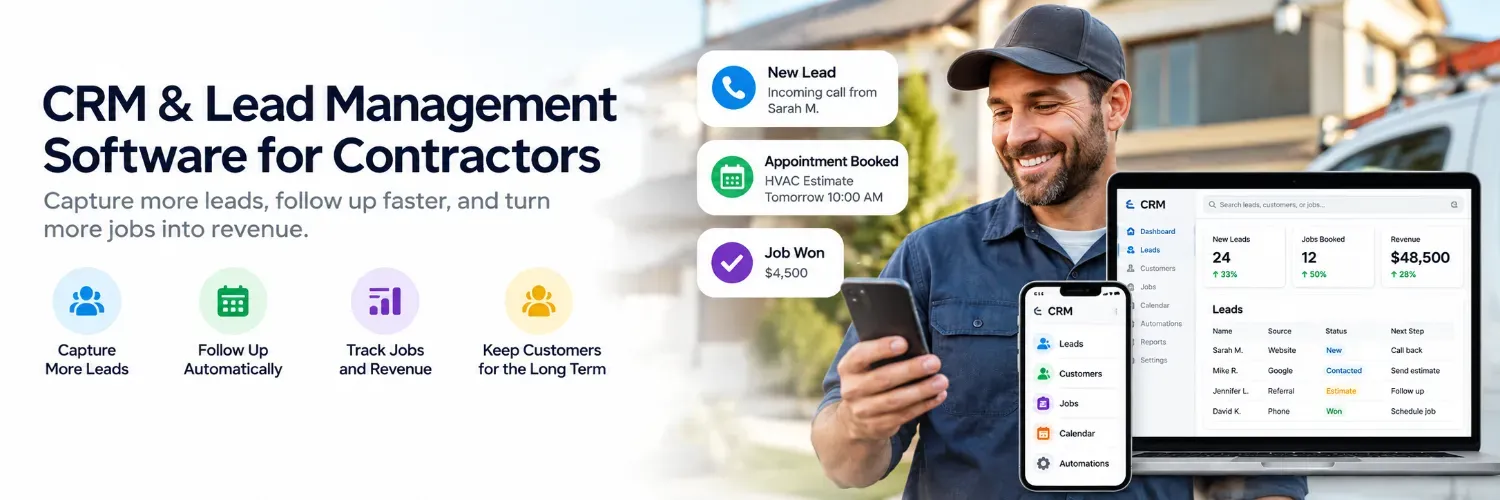
A contractor CRM is a customer relationship management system designed to help service businesses organize prospects, customers and sales activity. It gives your team a central place to see new inquiries, open opportunities, follow-up tasks, estimates, customer history and the next action required to move a lead toward a booked job.
Some contractor CRM platforms focus mainly on sales and lead management, while others are part of a broader field service system that also handles scheduling, dispatch, invoicing or payments. The right choice depends on whether you need a dedicated sales pipeline or an all-in-one operating platform.
CRM Features Contractors Should Compare
When comparing CRM software for contractors, focus on the workflows that directly affect how quickly your team responds to leads and how consistently opportunities are followed through.
Lead and contact management
Custom sales pipelines and opportunity stages
Lead source and campaign tracking
Automatic email and SMS follow-up
Tasks, reminders and salesperson assignments
Call notes, customer history and activity timelines
Estimate and appointment follow-up
Lead qualification and tagging
Reporting on conversion rates and sales performance
Integrations with phone, email, calendars and field-service software
If your company receives a high volume of phone leads, consider how the CRM connects with AI receptionist and answering software. Fast lead capture matters, but the real value comes from making sure those leads enter the pipeline and receive consistent follow-up.
Lead Management and Follow-Up Matter
Many service businesses lose opportunities because a lead is contacted once and then forgotten. A good lead management system should make it easy to see which prospects are new, contacted, quoted, waiting on a decision or ready for another follow-up.
Automations can help send reminders, follow-up texts or emails after an inquiry or estimate, but they should support the sales process rather than make every customer interaction feel identical. Look for tools that let you control timing, templates, assignments and when a person should take over.
CRM Software vs. Field Service Management
CRM and field service software often overlap, but they solve different parts of the customer journey. A CRM usually concentrates on leads, sales opportunities and customer relationships before the job is won. Field service management software typically becomes more important once work needs to be scheduled, dispatched, completed and invoiced.
Some contractors prefer one platform that handles both sales and operations. Others use a specialized CRM and connect it to their scheduling, estimating or accounting tools. If you already have operational software you like, confirm what CRM integrations are available before switching systems.
Choose a CRM That Fits Your Trade and Sales Process
A small owner-operated company may only need simple contact management, reminders and a clear sales pipeline. Larger businesses may need multiple pipelines, automated lead assignment, team permissions, call tracking and detailed reporting.
HVAC contractors, plumbing contractors and electrical contractors may also want the CRM to connect estimates, service history and recurring customer opportunities to the same customer record. The best system is the one your team will consistently use rather than the one with the longest feature list.
Compare Contractor CRM Software Before You Commit
Before choosing a platform, compare pricing, user limits, automation allowances, mobile access, integrations and how easy it is to customize the pipeline around your actual sales process. Use Compare to review your shortlist side by side, or use the AI Software Advisor to narrow the options based on your trade, company size, priorities and budget.
Not sure which contractor CRM fits your business?
Compare CRM and lead management tools side by side or use the AI Software Advisor to narrow your options based on your sales process, team size and workflow.